
We’re just back from Vancouver, Canada, seeing some of our customers on the West Coast. This was a quick trip, but a valuable one. Vancouver is a hot-spot for a range of technology companies, several of which work in PCIe, Ethernet and CXL, which we specialise in.
 is our local reseller and did a great job of arranging visits.

Vancouver Tech
Microchip‘s Vancouver team works on high-speed PCIe and Ethernet silicon.
Tenstorrent is making high-end AI hardware such as the Galaxy Solution which requires high-end PCIe and Ethernet links for communication. Power consumption is also a big thing for AI systems, both at the level of individual accelerator cards and also at the whole system level.
Astera Labs is a specialist in PCIe re-timers, which are key to extending the range of PCIe signals, especially at Gen5 speeds and beyond, where signal integrity becomes a real challenge.
NetInt develops high-end ASICS for video encoding and more.
Learning Points
-
For many customers Gen5 is still the main driver. Gen6 is a big thing, but mainly for the early adopters. Gen7 is very much on the roadmap and mainly being driven by AI. The Gen8 spec is already at v0.5 so is progressing quickly as well

-
GPU power analysis was a key point of interest, with several customers looking to evaluate units.
One thing I had missed was how many modern Gen6 ICs are so power hungry that they need external power in addition to the PCIe slot. It’s not just GPU/AIU accelerator manufacturers that can benefit from the Quarch GPU PAM range. These allow you to measure the full power consumption of a device and even monitor the digital sidebands for enhanced debugging.
-
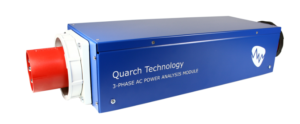
System power is becoming a bigger thing as well. Being able to measure the power of an entire AI rack is extremely useful when you are trying to optimise power consumption. Also, when you need to accurately understand how much it will use in different workloads.
Customer Focus
One interesting customer we visited was LTT Labs, part of the Linus Media Group. This is a Canadian YouTube channel that has grown big enough to support its own high-tech lab.
If you’ve never seen their videos, then here is an old one, but one that was very relevant in the earlier days of PCIe hot-plugging and why it is so hard!
I’ve NEVER been so FRUSTRATED… Hot-Swapping PCIe Cards
The labs team is a newer venture for LTT, and they can run a wide range on everything from laptop charging times to comparative CPU and GPU performance.
On their blog, you can see how they use some of our power analysis tools: USB-C Charge Testing
They also have their own sponsored fire engine, so clearly they have all the tools they need!


Andy Norrie